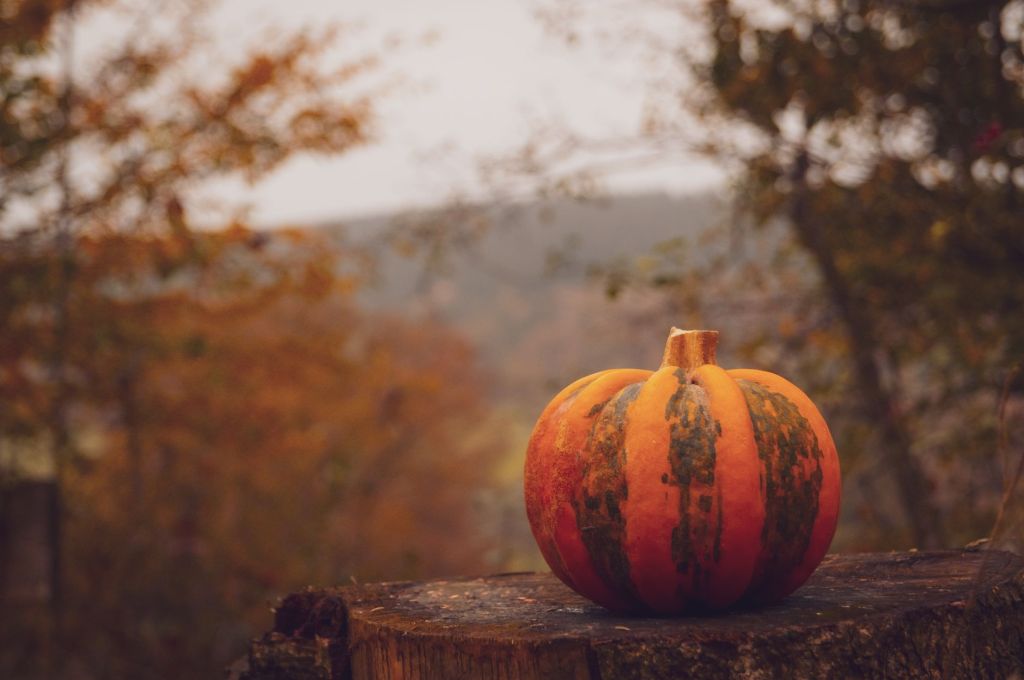
If you think back to your childhood and recall an experience in nature—especially a nice one—odds are you’ll feel something that is an odd mix of fondness but also longing to experience that exact moment again. A sweetness shaded with a slight bitterness knowing that the moment is gone. Nostalgia.
Our recent research suggests that experiencing nostalgia for nature makes us feel more connected to it.
Why look at nostalgia?
Research clearly shows that different emotions tend to have different effects on nature connectedness. Usually, positive emotions positively predict nature connectedness. Usually, negative emotions negatively predict it. Yet, not all emotions, not even all positive ones, are created equal. For example, awe tends to be an especially strong predictor of nature connectedness, whereas feeling amused tends to be weaker. The specific emotion matters.
And if the specific emotion matters, nostalgia seemed especially likely to be important for nature connectedness. The paper goes into much more detail, but nostalgia is a notably social emotion which has been shown to predict social connectedness. Given the logical closeness of nature connectedness and social connectedness, we hypothesized that nostalgia would be a notable predictor of nature connectedness.
Study 1: Nostalgia vs. positive emotions.
In one study, we asked participants what emotions they were currently feeling and how connected to nature they were. Then, we asked them to reflect on a past nature experience for five minutes. After that, we asked them, again, about their emotions and their sense of nature connectedness.
We used that data to estimate how much their emotions changed (positive emotions, negative emotions, and nostalgia) and whether those changes predicted change in nature connectedness from start to finish. We found that, even controlling for positive and negative emotions, increases in nostalgia predicted increases in nature connectedness. In plainer English, after reflecting on a nature experience, participants felt more nostalgia, and the more nostalgia they felt, the more connected to nature they reported feeling.
Study 2: Is this causal?
The above study had no control condition, so we couldn’t be sure that nostalgia caused the increase in nature connectedness. So, in Study 2, we did a randomized experiment. We asked participants how connected to nature they felt. We randomly assigned half the participants to reflect on a nostalgic nature experience and the other half to reflect on planning a nature experience. Then we asked them about their nature connectedness again.
We found clear evidence that nature connectedness increased from start to finish. We found even clearer evidence that the size of this increase was different for nostalgia compared to planning; participants who reflected on nostalgia showed a significant and meaningful increase in nature connectedness, whereas planners did not.
So, yes, it is causal!
Study 3: So why does nostalgia make us feel more connected?
Study 1 showed that the intensity of experienced nostalgia (i.e., measured nostalgia) predicted nature connectedness above and beyond mere positive affect. Study 2 showed that this effect was causal. So, then, we wondered what mechanism explained this effect? What chain reaction was behind it? What domino did nostalgia knock over that then knocked into nature connectedness?
Based on the literature, we hypothesized that nostalgia might have this effect because of its association with eudaimonia—if you want to know much more about what that is, you can read about it in this paper of mine: CITE.
In short, eudaimonia is the experience of things like meaning in life, feeling like you’re being your true or authentic self, and personal growth. Something that is not only known to result from nostalgia, but also something that is known to be associated with nature connectedness. This suggested that nostalgia might lead to eudaimonia which might lead to nature connectedness.
In Study 3, we tested this. Much like Study 1, participants reported their nature connectedness and eudaimonia. Then, they engaged in a reflection on a nostalgic nature experience. Then, they reported their nature connectedness and eudaimonia again.
Just as we expected, reflecting on nostalgia increased eudaimonia and increased eudaimonia predicted nature connectedness. Which is to say, at least part of the reason nostalgia predicts nature connectedness seems to be because of it fostering eudaimonia.
Insights for action:
So what should we do with this information? If you’re a practitioner, or anyone adjacent to this, the advice is simple: consider how you can design prompting, messaging, or activities in a way that directly evokes feelings of nostalgia for nature. These might even be as simple as encouraging people to recall a fond memory of a time they spent in nature.
If you’re simply someone interested in deepening your relationship with nature, I suppose the advice is likewise simple: take a moment to reflect on nature experiences from your past. It is, perhaps, rather appropriate that this paper was published in October. For me, there is nothing so nostalgic as autumn—sweater weather, bonfires, working on the apple orchard and mulled cider, donuts too! When the leaves turn, I cannot help but think back upon all my fond memories, the very ones that make me long to spend every minute outside in the woods. So, for you, find your version of autumn. Find the thing that makes you wish you could have it all back and could spend all your time in nature!
Read more about it here:
Lengieza, M. L., & Aviste, R. (2026). Longing for nature: Becoming more connected to nature through nostalgia. People and Nature. https://doi.org/10.1002/pan3.70449
Some of my related papers:
Lengieza, M. L. (2024). Eudaimonic self-expansion: The effects of eudaimonic reflections on nature connectedness. Journal of Environmental Psychology, 102231. https://doi.org/10.1016/j.jenvp.2024.102231
Lengieza, M. L., Swim, J. K., & Hunt, C. A. (2021). Effects of post-trip eudaimonic reflections on affect, self-transcendence, and philanthropy. The Service Industries Journal, 41(3-4), 285-306. https://doi.org/10.1080/02642069.2019.1636966
Lengieza, M. L., & Aviste, R. (2025). Relationships between people and nature: Nature connectedness and relational environmental values. Current Opinion in Psychology, 62, 101984. https://doi.org/10.1016/j.copsyc.2024.101984

